Which among the following countries are latest entry into the WTO membership?
AAfghanistan
BBhutan
CNepal
DBangladesh
Correct Answer: Option A
Among the options provided, Afghanistan is the most recent country to join the World Trade Organization (WTO). It officially became the 164th member on July 29, 2016, after more than a decade of negotiations.
2025
Prelims General Studies (Paper 1) General Science
What was the theme of World AIDS Day for the year 2017?
ARight to health
BClose the Gap
CGetting to Zero
DZero Discrimination
Correct Answer: Option A
In 2017, the World Health Organization (WHO) and UNAIDS focused on the #myrighttohealth campaign. This theme emphasized that everyone, regardless of their circumstances, has the right to the highest attainable standard of physical and mental health, including access to prevention, treatment, and care for HIV.
2025
Prelims General Studies (Paper 1) General Science
Consider the following countries:
I. United Arab Emirates
II. France
III. Germany
IV. Singapore
V. Bangladesh
How many countries amongst the above are there other than India where international merchant payments are accepted under UPI?
AOnly two
BOnly three
COnly four
DAll the five
Correct Answer: Option B
Among the five countries listed, only the United Arab Emirates, France, and Singapore have officially launched and made UPI (Unified Payments Interface) merchant payments (Person-to-Merchant or P2M) operational for Indian travelers.Status Analysis of the CountriesCountryUPI Status (as of 2026)DetailsI. UAEAcceptedOne of the largest networks; accepted at over 60,000 outlets including Dubai Mall, airports, and through partnerships with Mashreq (NeoPay) and Network International.II. FranceAcceptedThe first European country to adopt UPI. It is live at the Eiffel Tower and is being expanded to other merchant locations via the Lyra network.III. GermanyNot AcceptedWhile there are broad discussions regarding UPI expansion in Europe (through Worldline), Germany does not currently have live merchant acceptance for UPI.IV. SingaporeAcceptedUPI is linked with Singapore's PayNow system. While primarily known for P2P (Peer-to-Peer) transfers, merchant (QR) payments are also widely supported.V. BangladeshNot AcceptedDespite MoUs regarding digital cooperation and cross-border connectivity, merchant-level UPI payment is not currently live for Indian tourists in Bangladesh.Global UPI Acceptance MapAs of early 2026, UPI merchant payments are live in at least 8 countries outside of India:Bhutan (First to adopt)SingaporeUnited Arab Emirates (UAE)NepalFranceMauritiusSri LankaQatarNote: Acceptance usually requires the traveler to enable "UPI Global" or international payments within their UPI app (like BHIM, PhonePe, or Google Pay) and involves a currency conversion fee determined by the bank.
2025
Prelims General Studies (Paper 1) Economy
With reference to investments, consider the following:
Bonds
Hedge Funds
Stocks
Venture Capital
How many of the above are treated as Alternative Investment Funds?
AONDSDD
BDD
CDDD
DFFF
Correct Answer: Option C
The correct answer is Option 2
Key Points
Alternative Investment Funds (AIFs) are privately pooled investment vehicles that do not fall under traditional investment categories like publicly traded stocks or bonds.
In India, AIFs are regulated by SEBI (AIF) Regulations, 2012 and categorized as:
Category I: Venture Capital Funds, SME Funds, Social Venture Funds
Category II: Private Equity Funds, Debt Funds
Category III: Hedge Funds, PIPE Funds (Private Investment in Public Equity)
Evaluation of Options:
Bonds: Bonds are traditional debt instruments and are not considered AIFs.
Hedge Funds: These fall under Category III AIFs and are designed for high-risk, high-return strategies.
Stocks: Stocks are traditional equity instruments and not part of the AIF structure.
Venture Capital: Venture capital funds are classified as Category I AIFs, aimed at funding startups and early-stage ventures.
Only Hedge Funds and Venture Capital qualify as Alternative Investment Funds. Therefore, only two of the listed options are correct.
2025
Prelims General Studies (Paper 1) Economy
With reference to investments, consider the following:
Bonds
Hedge Funds
Stocks
Venture Capital
How many of the above are treated as Alternative Investment Funds?
(a) Only one
(b) Only two
(c) Only three
(d) All the four
AONDSDD
BDD
CDDD
DFFF
Correct Answer: Option C
The correct answer is Option 2
Key Points
Alternative Investment Funds (AIFs) are privately pooled investment vehicles that do not fall under traditional investment categories like publicly traded stocks or bonds.
In India, AIFs are regulated by SEBI (AIF) Regulations, 2012 and categorized as:
Category I: Venture Capital Funds, SME Funds, Social Venture Funds
Category II: Private Equity Funds, Debt Funds
Category III: Hedge Funds, PIPE Funds (Private Investment in Public Equity)
Evaluation of Options:
Bonds: Bonds are traditional debt instruments and are not considered AIFs.
Hedge Funds: These fall under Category III AIFs and are designed for high-risk, high-return strategies.
Stocks: Stocks are traditional equity instruments and not part of the AIF structure.
Venture Capital: Venture capital funds are classified as Category I AIFs, aimed at funding startups and early-stage ventures.
Only Hedge Funds and Venture Capital qualify as Alternative Investment Funds. Therefore, only two of the listed options are correct.
2025
Prelims General Studies (Paper 1) History
Consider the following statements about Raja Ram Mohan Roy:
i. He possessed great love and respect for the traditional philosophical systems of the East.
ii. He desired his countrymen to accept the rational and scientific approach and the principle of human dignity and social equality of all men and women.
Which of the statements given above is/are correct?
AI only
BII only
CBoth I and II
DNeither I nor II
Correct Answer: Option C
Traditional philosophical systems of the East
In Raja Ram Mohan Roy’s context, this mainly refers to Indian/Sanskritic philosophical and religious traditions—especially the Upanishads and Vedanta, along with the broader “classical” intellectual heritage of India and Asia.
Rational and scientific approach
Using reason, evidence, critical inquiry, and reform-minded thinking instead of superstition, blind custom, or unexamined authority.
Human dignity and social equality (men and women)
The idea that all humans have equal moral worth, and society should not deny people rights and respect on the basis of birth, caste, or gender (including reforms around women’s status).
Statement I
“He possessed great love and respect for the traditional philosophical systems of the East.”
✅ Correct.
Roy did not reject Indian tradition as a whole—he engaged deeply with it, especially Upanishadic monotheism and Vedantic ideas, and argued for reform from within a rational reading of the tradition.
Statement II
“He desired his countrymen to accept the rational and scientific approach and the principle of human dignity and social equality of all men and women.”
✅ Correct.
He strongly promoted reason-based reform and campaigned against social practices he considered unjust (famously including sati), and supported a more equal and dignified social order, including improvement in women’s status.
2025
Prelims General Studies (Paper 1) History
The irrigation device called ‘Araghatta’ was
AA water bag made of leather pulled over a pulley
BA large wheel with earthen pots tied to the outer ends of its spokes
CA larger earthen pot driven by bullocks
DA large water bucket pulled up by rope directly by hand
Correct Answer: Option B
2025
Prelims General Studies (Paper 1) Geography
Consider the following statements: Statement I: Scientific studies suggest that a shift is taking place in the Earth’s rotation and axis. Statement II: Solar flares and associated coronal mass ejections bombarded the Earth’s outermost atmosphere with tremendous amount of energy. Statement III: As the Earth’s polar ice melts, the water tends to move towards the equator. Which one of the following is correct in respect of the above statements?
ABoth Statement II and Statement III are correct and both of them explain Statement I
BBoth Statement II and Statement III are correct but only one of them explains Statement I
COnly one of the Statements II and III is correct and that explains Statement I
DNeither Statement II nor Statement III is correct
Correct Answer: Option B
Earth’s rotation and axis (spin axis): Earth spins around an imaginary line (the rotation axis) that intersects the surface near the geographic poles. The axis and the spin rate are not perfectly constant - they can change slightly.
Polar motion / axis shift: Small movements of where Earth’s spin axis intersects the crust (a “wobble” + longer-term drift), driven mainly by mass redistribution within/on Earth.
Length of day (LOD): Tiny changes in Earth’s rotation rate make the day slightly longer/shorter.
Solar flares & CMEs: Explosive solar events; CMEs can trigger geomagnetic storms and dump energy into the upper atmosphere/ionosphere, affecting satellites, radio, aurora, etc.
Mass redistribution from ice melt: When polar ice melts and water spreads into the oceans, mass tends to shift from high latitudes toward lower latitudes (toward the equator), changing Earth’s moment of inertia and affecting spin/axis.
Statement I:Studies suggest a shift is taking place in Earth’s rotation and axis.
✅ Correct. Observations and modeling show measurable changes in rotation/axis (polar motion, LOD variations), with climate-driven mass shifts being a major contributor.
Statement II:Solar flares and CMEs bombarded Earth’s outermost atmosphere with tremendous energy.
✅ Correct as a general space-weather statement (they strongly affect the upper atmosphere).
❌ But it does not explain Statement I in the usual scientific framing of long-term axis/rotation shift; the big, sustained driver discussed in the key studies is mass redistribution (ice melt/groundwater/oceans), not solar storms.
Statement III:As polar ice melts, water tends to move toward the equator.
✅ Correct, and this directly explains shifts in rotation rate and the rotation axis via redistribution of mass (making Earth slightly “fatter” at the equator and altering polar motion).
Correct option
Both Statement II and Statement III are correct, but only Statement III explains Statement I.
2025
Prelims General Studies (Paper 1) International Relations
Which one of the following launched the ‘Nature Solutions Finance Hub for Asia and the Pacific’?
AThe Asian Development Bank (ADB)
BThe Asian Infrastructure Investment Bank (AIIB)
CThe New Development Bank (NDB)
DThe International Bank for Reconstruction and Development (IBRD)
Correct Answer: Option A
Nature Solutions Finance Hub for Asia and the Pacific (NSFH)
A financing/platform initiative to mobilize and channel money into “nature-based solutions” projects (e.g., restoring forests/mangroves, watershed protection, biodiversity-linked climate resilience).
Nature-based solutions
Actions that protect, restore, or sustainably manage ecosystems to address challenges like climate change, disaster risk, water security, and biodiversity loss.
What the options are (quick context)
(a) ADB (Asian Development Bank): Multilateral development bank focused on Asia-Pacific development finance.
(b) AIIB: Multilateral bank focused largely on infrastructure and connectivity.
(c) NDB: BRICS-led development bank.
(d) IBRD: The World Bank’s lending arm for middle-income countries.
Correct answer (who launched it?)
The Asian Development Bank (ADB) launched the Nature Solutions Finance Hub for Asia and the Pacific (announced at COP28, December 2023).
2025
Prelims General Studies (Paper 1) Polity
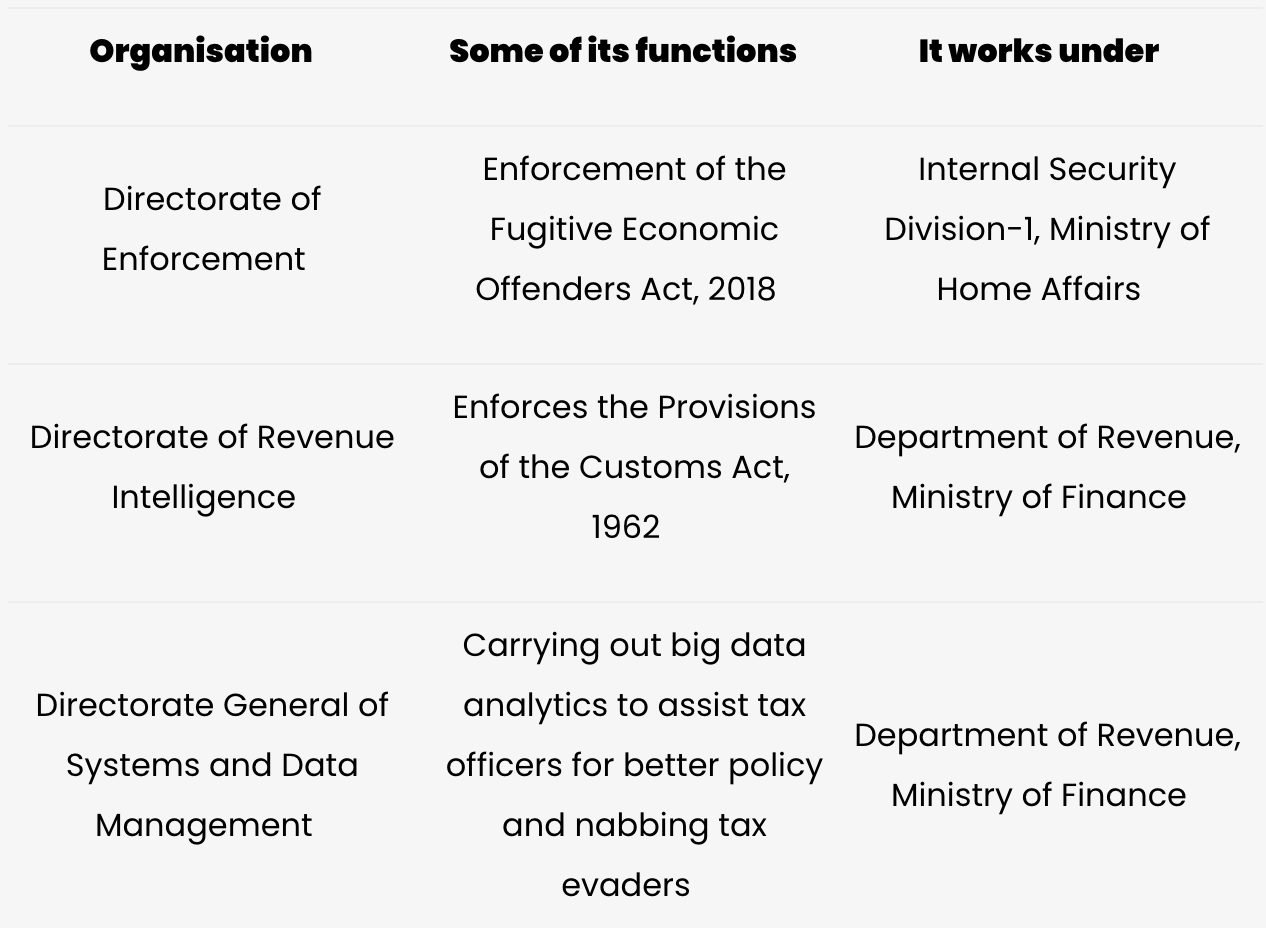
With reference to the Government of India, consider the following information:
In how many of the above rows is the information correctly matched?
AOnly One
BOnly Two
CAll the Three
DNone
Correct Answer: Option B
2025
Prelims General Studies (Paper 1) Environment & Ecology
Consider the following statements:
Statement I: Activated carbon is a good and an attractive tool to remove pollutants from effluent streams and to remediate contaminants from various industries.
Statement II: Activated carbon exhibits a large surface area and a strong potential for adsorbing heavy metals.
Statement III: Activated carbon can be easily synthesized from environmental wastes with high carbon content.
Which one of the following is correct in respect of the above statements?
ABoth Statement II and Statement III are correct and both of them explain Statement I
BBoth Statement II and Statement III are correct but only one of them explains Statement I
COnly one of the Statements II and III is correct and that explains Statement I
DNeither Statement II nor Statement III is correct
Correct Answer: Option A
Activated carbon (activated charcoal): A highly porous form of carbon processed (“activated”) to create a network of tiny pores. This makes it excellent for adsorption.
Effluent streams: Wastewater discharged from industries (textile, pharma, tanning, mining, etc.) that may contain pollutants.
Remediation: Cleaning up or reducing contaminants in polluted water/soil.
Adsorption (not absorption): Pollutants stick onto the surface of a solid (activated carbon) due to surface forces.
Surface area: Activated carbon has an extremely high internal surface area because of its pores—this provides many “sites” for pollutants to attach.
Heavy metals: Toxic metal ions like Pb, Cd, Hg, Cr, As, etc.
Check the statements
Statement I: Activated carbon is a good and attractive tool to remove pollutants from effluents and remediate contaminants.
✅ Correct. It’s widely used for water treatment and pollution control.
Statement II: Activated carbon has large surface area and strong potential for adsorbing heavy metals.
✅ Correct. Its high porosity and surface functional groups allow adsorption of many contaminants; heavy-metal uptake can be significant (often enhanced further by surface modification).
Statement III: Activated carbon can be easily synthesized from environmental wastes with high carbon content.
✅ Correct. Many biomass/agro-wastes (coconut shells, sawdust, rice husk, nutshells, etc.) can be converted into activated carbon, making it cheaper and sustainable.
Both II and III are true, and both explain why activated carbon is an “attractive tool” in Statement I:
II explains effectiveness (high adsorption capacity).
III explains attractiveness/practicality (low-cost, waste-to-resource, scalable).
2025
Prelims General Studies (Paper 1) Economy
With reference to investments, consider the following:
i. Bonds
ii. Hedge Funds
iii. Stocks
iv. Venture Capital
How many of the above are treated as Alternative Investment Funds?
AOnly one
BOnly two
COnly three
DAll the four
Correct Answer: Option B
Alternative Investment Funds (AIFs)
An AIF is a pooled investment vehicle (a “fund”) that collects money from investors and invests it using strategies other than the traditional mutual-fund-like route of buying listed stocks and bonds in a plain way.
Common examples of AIFs (globally and in India’s regulatory usage) include:
Hedge funds (complex/active strategies; may use leverage, derivatives, long–short, etc.)
Venture capital funds (invest in early-stage/startups)
Also: private equity funds, real estate funds, infrastructure funds, etc.
Traditional investments (generally not called AIFs) include:
Stocks (equity shares, especially listed)
Bonds (debt instruments)
Bonds → Traditional debt instrument, not a fund by itself. ❌ Not an AIF
Hedge Funds → Classic example of alternative funds. ✅ AIF
Stocks → Traditional asset class (equities), not a fund structure. ❌ Not an AIF
Venture Capital → Typically done through venture capital funds, which are AIFs. ✅ AIF
2025
Prelims General Studies (Paper 1) History
Who among the following rulers in ancient India had assumed the titles ‘Mattavilasa’, Vichitrachitta’ and ‘Gunabhara?
AMahendravarman I
BSimhavishnu
CNarasimhavarman I
DSimhavarman
Correct Answer: Option A
These are birudas (honorific titles/epithets) adopted by kings in inscriptions and literature—basically royal “style names” used to project a ruler’s personality, achievements, and ideals.
Mattavilāsa
Literally “one who delights in revelry / playfulness.” It’s also strongly associated with the satirical Sanskrit play Mattavilāsa Prahasana (“The Farce of Drunken Sport”), traditionally credited to the same ruler.
Vichitrachitta (Vichitra-chitta)
“The one with a curious/wondrous mind” or “possessing an artistic, inventive intellect.” Used to signal refined taste and creativity.
Guṇabhara
“Bearer of virtues/excellences” (guṇa = virtues/qualities, bhara = load/bearer). A title praising moral and kingly qualities.
Who assumed these titles?
These titles are famously associated with the Pallava king Mahendravarman I (early 7th century CE), known for:
literary activity (linked with Mattavilāsa Prahasana),
patronage of art/architecture (early rock-cut temples),
and multiple birudas in Pallava records.
2025
Prelims General Studies (Paper 1) Science and Technology
Consider the following types of vehicles:
i) Full battery electric vehicles
ii) Hydrogen fuel cell vehicles
iii) Fuel cell-electric hybrid vehicles
How many of the above are considered as alternative powertrain vehicles
AOnly One
BOnly Two
CAll the three
DNone
Correct Answer: Option C
Key terms in the question
Powertrain: The system that produces power and delivers it to the wheels: energy source + conversion device + drivetrain (e-motor/engine, gearbox, etc.).
Alternative powertrain vehicle: A vehicle whose propulsion is not based on the conventional petrol/diesel internal combustion engine (ICE) as the primary power source. Typically includes electric, fuel cell (hydrogen), hybrids, and other non-conventional propulsion setups.
I. Full battery electric vehicles (BEVs)
Run on electric motor(s) powered by a battery.
No petrol/diesel engine.
✅ Alternative powertrain.
II. Hydrogen fuel cell vehicles (FCEVs)
Use hydrogen in a fuel cell to generate electricity, which drives an electric motor.
Not a conventional petrol/diesel ICE powertrain.
✅ Alternative powertrain.
III. Fuel cell–electric hybrid vehicles
Combine a fuel cell system with a battery (or another electric storage system); propulsion is still electric, with hybridized energy sources.
Still not conventional petrol/diesel ICE propulsion.
About UPSC CSE Prelims 2025 Previous Year Questions
Practicing previous year questions is one of the most effective strategies for UPSC CSE exam preparation. This page contains 14 authentic questions from the UPSC CSE Prelims 2025 examination, complete with answers and detailed explanations.
At Quintessence Classes, we believe that understanding past exam patterns is crucial for success in competitive examinations. Our curated PYQ collection helps students identify frequently tested topics, understand the difficulty level, and practice with real exam questions. Whether you are preparing for UPSC CSE, JKPSC KAS, or JKSSB exams, our previous year questions database is designed to give you an edge in your preparation.